Agent Mystro
One endpoint that sends each request to the AI model that earned that work.
About
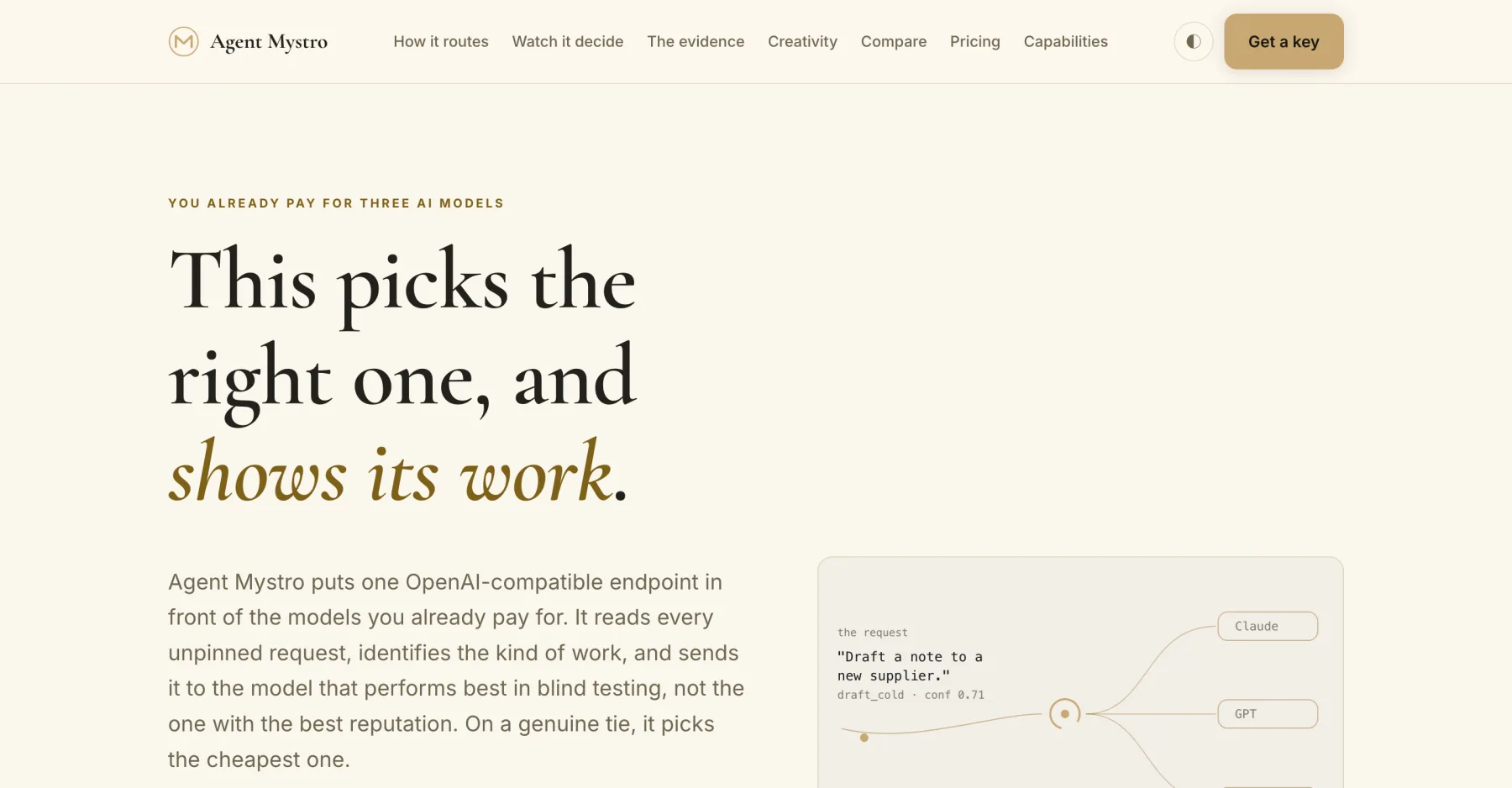
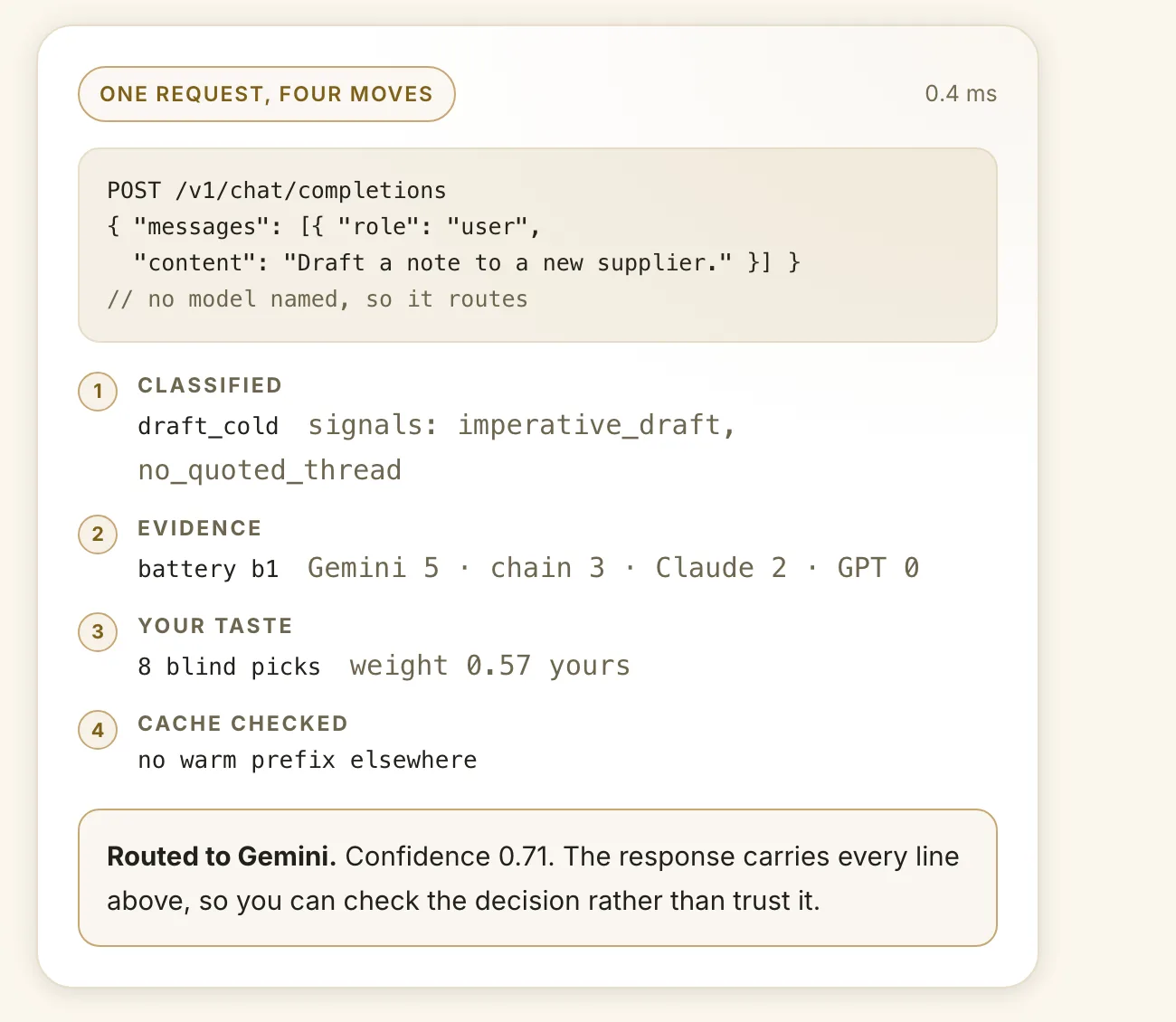
Agent Mystro puts one OpenAI-compatible endpoint in front of the models you already pay for. It reads every unpinned request, identifies the kind of work, and sends it to the model that performs best in blind testing, not the one with the best reputation. On a genuine tie, it picks the cheapest.
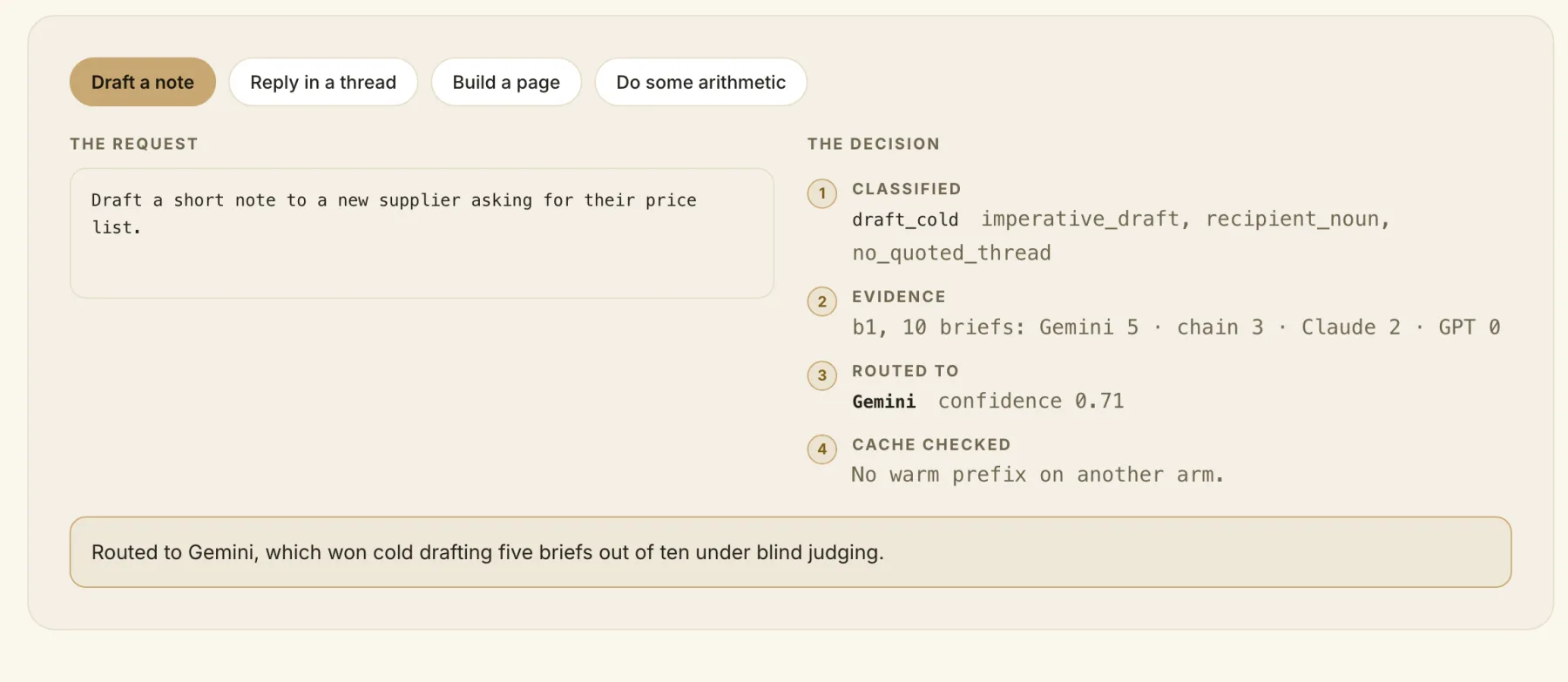
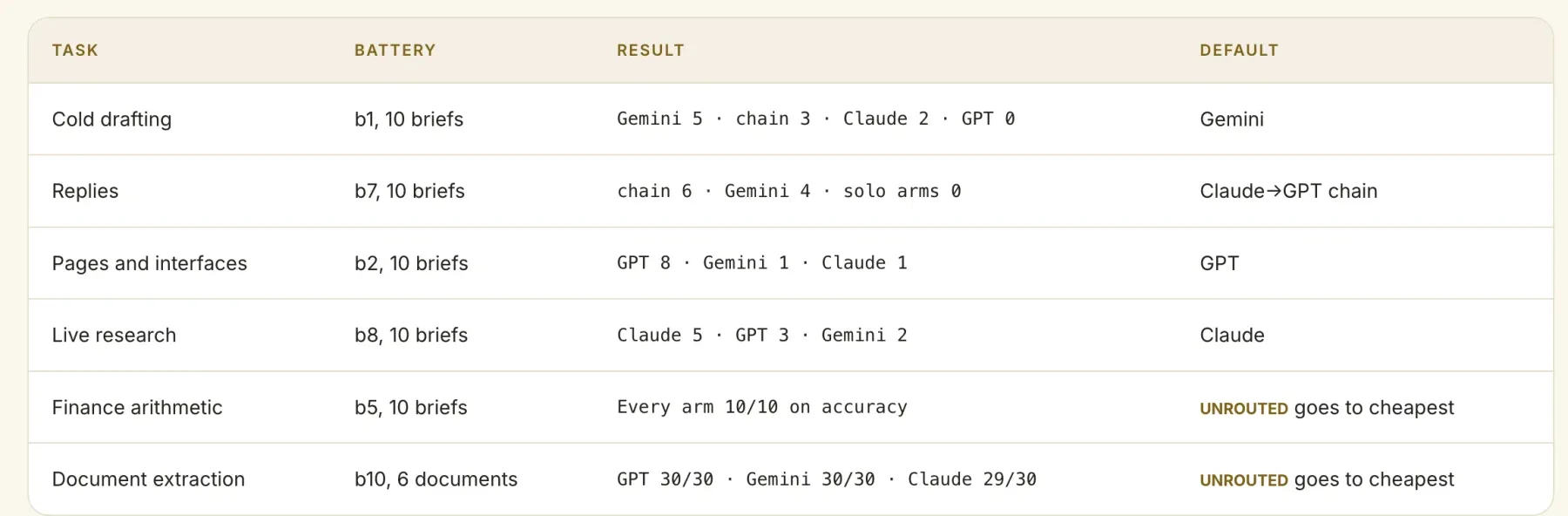
Routing defaults come from blind batteries: outputs shuffled, stripped of provenance tells, judged blind, and decoded against an offline key. On pages and interfaces, one model won eight of 10 briefs; on cold drafting, a different one led. Every default on the site carries its run and sample size.
Then it learns your taste. Ask for a taste check, get two answers with the labels off, and your pick adjusts how future requests route. After about six picks, your choices outweigh the population default.
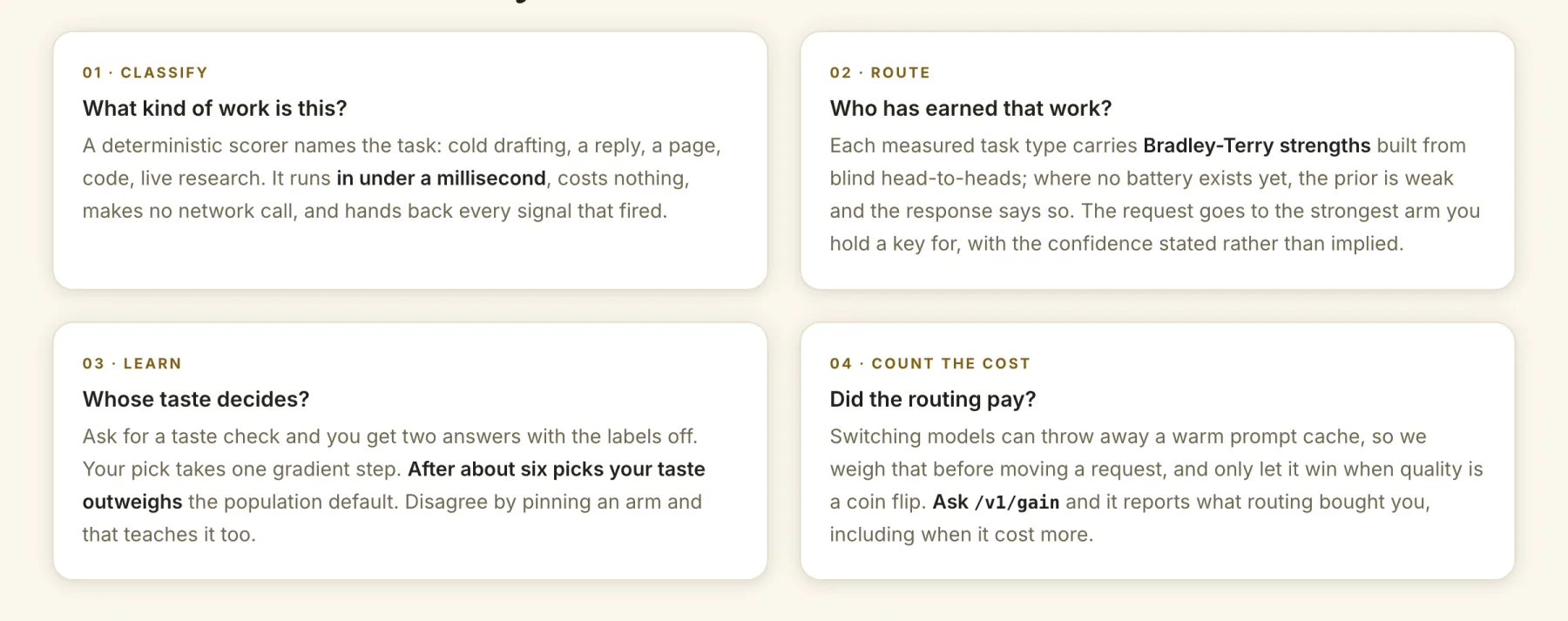
Classify
A deterministic scorer names the task, such as cold drafting, a reply, a page, code, or live research. It runs in under a millisecond and hands back every signal that fired.
Route
Each measured task type carries Bradley-Terry strengths built from blind head-to-heads. The request goes to the strongest model you hold a key for, with the confidence stated.
Learn
Blind picks you make tune the routing. After about six picks your taste outweighs the population default, and pinning a model teaches it too.
Count the cost
Switching models can discard a warm prompt cache, so Agent Mystro weighs that first. The gain endpoint reports what routing bought you.
Models working in concert
A council endpoint sends two to five options to one seat per model family on your own keys and returns the ranking, each seat's vote, and the strongest dissent.
Works with your tools
Streaming, tool calling, and an MCP endpoint are supported, and a machine-readable capabilities page lists the measured defaults.